EI Continuum Reflection Review · Team Facilitation
Most of what gets called a strategy problem is actually a conditions problem
When a project stalls, the first instinct is usually to add something — a new framework, a new workshop, another band-aid. Too often, the erosion of trust beneath the work is what we should have been looking at all along. The EI Continuum Reflection Review is one facilitated session to map where your team actually is: what the conditions around your work make possible, and what they quietly make difficult. It is team facilitation built on art-based inquiry and structured reflection — the method I have worked with in my own practice for more than thirty years.
Nothing is booked automatically after the review, and you are not obliged to continue. The workbook and the written summary are yours to keep, including the parts that are uncomfortable to read out loud. If the review shows you need something other than further work with me, I will say so.


02 / Alignment This may be for you if…
The work has stalled, and the usual fixes keep circling back.
A stalled project is not automatically a problem of motivation, communication style, or individual performance. Those things may be going on, but they are rarely the whole story and almost never where the change begins. The conditions around the work — organizational friction, stalled culture change, quietly widening decision friction — deserve attention too. Team facilitation starts inside that gap: with an honest read on what the system is doing, and with the people in it treated as the ingredient rather than the obstacle.
Inside the organization, this rarely gets called organizational friction. It gets called the stalled pipeline. Renewal risk on an account nobody wants to touch. Procurement distrust. Leadership fatigue. Decision delays no one will name out loud. Hidden friction — carried by whoever sits closest to the work and is least able to set it down.
The same friction returns
Your team meets the same obstruction again — after the strategy changed, after the tooling changed, after everyone agreed to try a different way.
Conversations get avoided
Certain conversations keep getting postponed, softened, or talked around. The work continues anyway, still carrying the same weight.
Two versions of the change
Leadership is describing one change. Your people are experiencing another. That gap is where information stops moving and trust begins to erode.
Adaptation isn’t landing
Your organization needs to adapt, and the ways it already works will not carry it there. Innovation fatigue settles in when nothing else is offered.

The conditions are the work.
Before a stalled team is a motivation problem, it is a conditions problem: how decisions get made, whether it is safe to speak, and whose knowledge counts. Too often, these issues are held until there are legal, financial, or public relations consequences.
Two entry points — explore first, or go straight to a closer look
The EI Continuum Assessment Guide names the seven stages and the signs that help you begin noticing what is already happening inside your own organization — psychological safety, cross-functional collaboration, leadership alignment. The EI Continuum Reflection Review is the focused conversation about your situation specifically: where the friction sits, what it is costing, and one place to begin.
Free · Start here
Assessment Guide
A one-page visual overview of the seven Continuum stages — from Status Quo to Empowered Innovation™ — with the indicators for each stage and the research behind them. Begin where you are.
Paid · A closer look
EI Continuum Reflection Review
A facilitated review of where your team actually sits on the Continuum, using your completed Reflection Worksheet, ending in a written summary and one practical place to begin.
03 / Methodology The approach
People adapt to change when they have helped build it.
Sustainable change requires more than a new strategy. It calls for conditions where people can speak honestly, recognize one another’s knowledge, and take part in shaping what comes next. Yvette Dubel · Empowered Innovation™ CFAaP™ Understanding where you are, is key to your next step.
Why success is a buffet, not a ladder
The Success Buffet Pyramid™ treats success as nourishment you choose, rather than a rung you climb. Here is what that changes about where a person decides to put their attention.
Read the transcript
Most people picture success as a ladder. You climb it rung by rung, and somewhere at the top there is a sign that tells you you made it. I want to offer you a different image. Success as a buffet.
Think about what a buffet actually is. You do not eat the whole table at once. You go back for more when you are hungry again, and there is always more when you need it with plenty to share. And because you are choosing, you get to decide what you actually want, instead of accepting whatever was handed down to you.
That moves the question away from how do I get to the top, and toward two harder questions. What do I need right now, and what am I going to keep choosing? It also interrupts the greed that usually fuels the drive for success. You do not have to eat it all at once or worry someone else will eat your portion.
In the SoulFood Framework™ I think of the person as the primary ingredient. Primary attention is given to you, to your clarity and your choices, and to your ability to notice what actually satisfies you and what does not. Success becomes nourishment you choose, rather than a rung you climb.
One caution. The ladder taught us that more is better and that arriving is the point. Letting go of that conditioning is part of the work. A buffet assumes you are still hungry, that there is something left to taste, and that you get to decide what it is.
What change looks like when people help build it
The Empowered Innovation CFAaP System™ names the seven stages an organization moves through, from compliance to genuine ownership. Here is how I read them in practice.
Read the transcript
Here is how I read the Empowered Innovation Continuum in practice.
Seven stages, from Status Quo to Empowered Innovation. Status Quo is where friction is present but nobody has named it, so patterns repeat because no one has articulated what is happening. Compliance Driven comes next. The work happens because it is required, and input rarely reaches the decision.
Then Independently Motivated. One person is driving it. The work is good, it lives on that person’s initiative, and there is no team buy-in. That is the stage I see most stalled projects sitting in.
Stage four is Interdependently Motivated. People rely on each other to succeed. Real collaboration, but in pockets, with a risk of dependency and no shared ownership. Stage five, Team Effectiveness. The team functions well and it understands the seven principles. Innovation shows up inside departments, and that is where silos start to appear. Stage six, Organizational Innovation. Innovation is part of the culture, built into roles and measurements and expected. Stage seven, Empowered Innovation. Innovation is a business priority, directed through systems and metrics, and it is bottom up. People are empowered.
Here is what I want you to notice. Stages four and five are where innovation actually lives, in healthy teams. And a one-time workshop does not move an organization. The research on mandated training is clear. Make it mandatory, make it remedial, wrap it in negative language, and it decays fast.
So the question is not whether your people sat through the workshop. It is what the conditions around the work make possible.
Why art is the method, not the metaphor
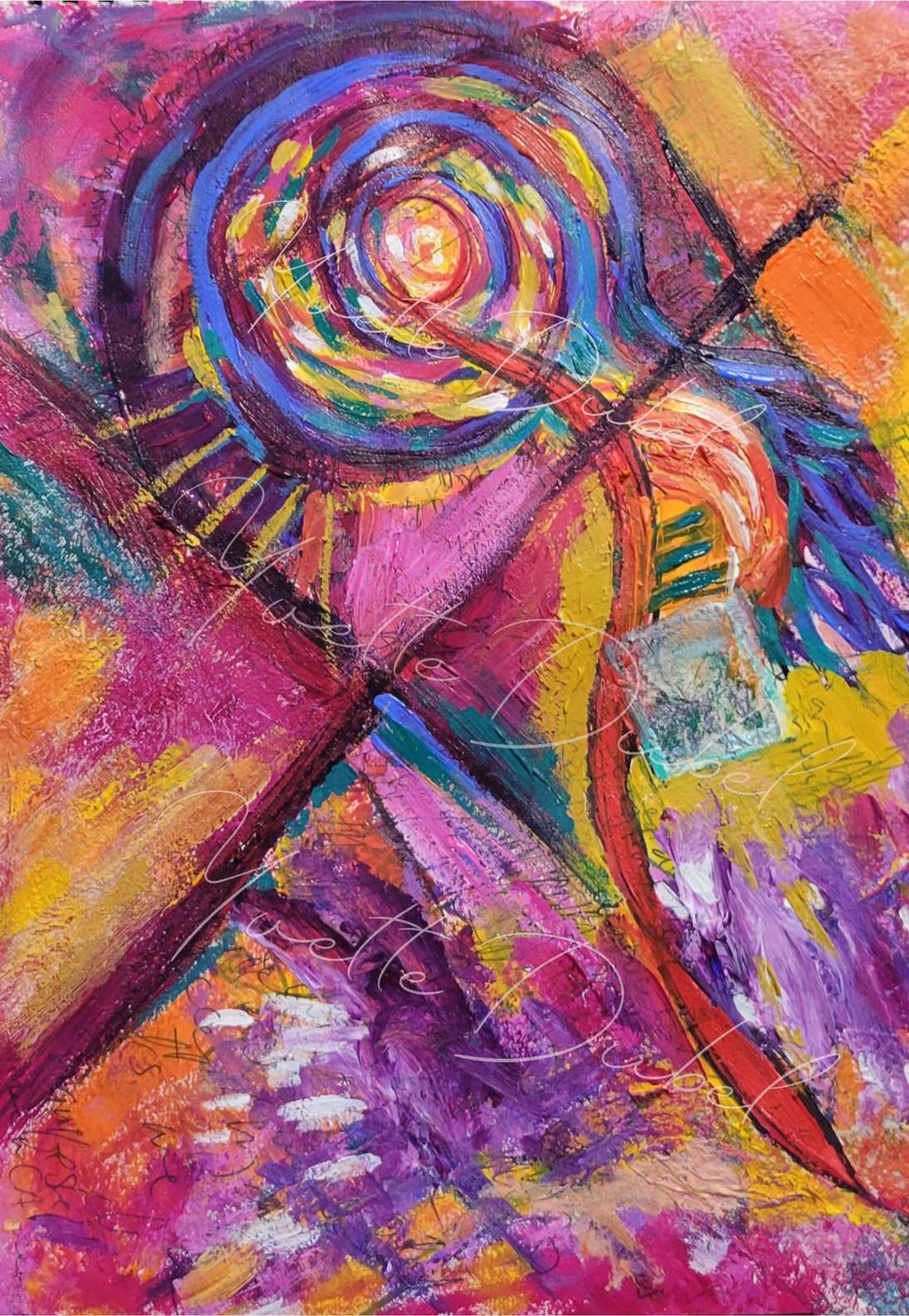
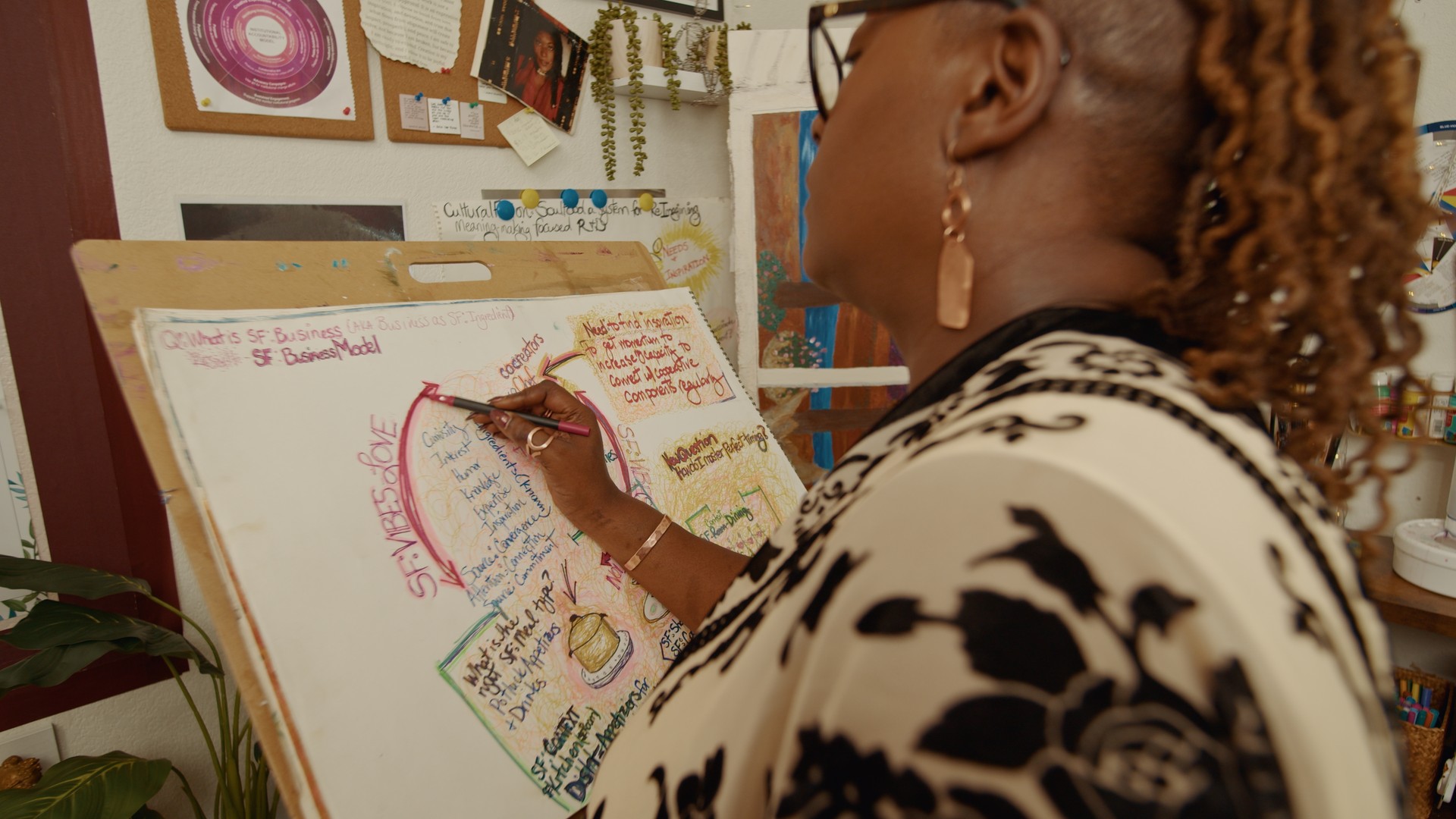
The art is the instrument, not the illustration. Making, marking, and rearranging material gives a group something true to say out loud. Here is how it works in a facilitated room.
Read the transcript
People often assume art is a metaphor for what I do. It is not. The art is the instrument.
When you sit down to make something, you are doing something most conversations cannot. You are looking at your own system while you are still inside it. I call that systems being. You are paying attention to what is happening inside you while your hands are moving.
Here is the sequence. You journal. Not a diary entry. A working surface where language gets made specific instead of general. Then you treat that page as material. You cut it, you rearrange it, you collage it with other fragments, and sometimes you paint over it.
What happens is that the thing you could not say out loud becomes visible enough to look at. And a group can look at it together without anyone having to defend a position, because the artifact is not a person.
Art also lights up connections that are not obvious, between events, between people, between objects. The point is not to produce a product. The point is that the making changes what you are able to see.
One caution. This is not protest art. It does not document a problem and call that the work. And it is not therapy. This is Art as a Solution, a method for turning a challenge into a launchpad, and for getting a group to stop circling the same conversation and start saying something true.
So much of the meaning we assign to things happens unconsciously. Art offers a path to see, acknowledge and address drivers beneath the surface.
I’m Yvette Dubel — an Artist-Researcher, a Cultural Systems Advisor, and the founder of Empowered Innovation™ CFAaP™ LLC. My practice brings art-based inquiry, structured reflection, team facilitation, and practical application into the same room, because the conditions around the work are the work.
I begin by listening to your situation rather than handing you a ready-made template. We look at what the surrounding conditions make possible or difficult, and we identify one next step — shaped around what matters to you, and honest about what the delay has already cost. If the honest answer is that the conditions, not the people, are what need to change, that is the finding.
The Empowered Innovation™ CFAaP System™ includes the Continuum and the 7 Principles of Empowered Innovation. Together they inform how I explore the conditions that support — or constrain — an organization’s ability to adapt, and how organizational effectiveness is actually defended, day to day.
When a MicroIntervention is appropriate, it is grounded in the Success Buffet Pyramid™ and shaped around the friction we’ve identified — not sold as a pre-set program. We name the friction, and what it is costing, before anyone talks about intervention.
A The framework behind the work
My organizational development work is informed by the Empowered Innovation™ CFAaP System™, built on the Empowered Innovation Continuum and the 7 Principles of Empowered Innovation. The system informs the work; it is not sold as a separate offer.
B The 7 Principles of Empowered Innovation
- What if — making room for the question no one has asked yet.
- See beyond — noticing what the current picture leaves out.
- Choices are truth — reading decisions as evidence of what values.
- Acceptance — making space for what is already true.
- Unknowing — staying available to what can’t be predicted.
- Liberation — releasing inherited definitions that no longer fit.
- Quantumplay — acting in small moves that unlock larger possibilities.
C Fit — and where this work may not be right
When we are honest, this may not be the right fit if you want a ready-made program rolled out without examining your context, or if a strategy is expected to be adopted without a say in it. It is not therapy or crisis support.
D What a MicroIntervention is — and isn’t
A MicroIntervention is a focused engagement identified from what the review surfaces. A broader Special Project or Collaboration may follow when organizational needs or an area of research calls for it. Nothing is booked until you decide to continue, and nothing is sold as a pre-set program.
The bridge One system, two levels of reading
“Individual capacity and collective conditions are creat the living system, measured at two scales.”
I keep two instruments in the practice, and they are not two businesses. The Success Buffet Pyramid™ Suite holds the personal layer. The Empowered Innovation™ CFAaP System™ holds the organizational layer. Together they describe one complex adaptive system.
That framing comes from my concept paper, A Business Case For Personal Innovation. The thinking is informed by the “innovation ecosystem” work and academic training in physics, of Alistair Brett, Ph.D. (a co-author of “The Innovation Rainforest”)- who validated my breakthrough concept after we discussed my insights on the conditions that prevent “innovation ecosystems” from functioning and effective ways to address them. A complex adaptive system, in my terms, is “a system in which a perfect understanding of the individual parts does not automatically convey a perfect understanding of the whole system’s behavior.” If that holds here, then a fix at either end has to be read as a fix at the other end too.
The Success Buffet Pyramid™ Suite
The individual layer, and the one most organizations skip. The person as primary ingredient: what you actually need right now, what you keep choosing, and the conditions that let you notice the difference between nourishment and more.
At this level, outcomes are personal before they are anything else. They “all emerge from a personal place within the individuals involved” — which is why individual agency creates real movement, and why it needs somewhere to land.
App · Playbook · SoulFood Framework™The Empowered Innovation™ CFAaP System™
The team and organization layer, read through the Continuum and the 7 Principles of Empowered Innovation. This is where hierarchy becomes visible, and where the conditions either let personal judgment travel upward or quietly cap it.
Within it, an individual may create necessary but not sufficient conditions to affect features at a higher level, and contingent contextual conditions are required as well. The Continuum is how we find out which conditions are actually in place.
Continuum · 7 PrinciplesNecessary is not sufficient
Personal insight creates necessary but not sufficient conditions for organizational change. Contextual conditions are required too. This is why one workshop, however good, does not move a system — and why a review that only produces insight has left the important half of the work undone.
Structure, not dominance
Complex adaptive systems form multiple hierarchies, about structure rather than dominance. So the map is not a ladder of rank. It shows how individuals at one level influence activity at a higher one, and where the information actually sits.
The whole does not follow from the parts
Understanding each person perfectly will not explain the group. Tacit knowledge lives in the lower levels, where people hold knowledge and information management does not. The artifact is how that knowledge becomes visible enough to work with.
The way forward is a deeply personal one because the outcomes all emerge from a personal place within the individuals involved. Yvette Dubel · A Business Case For Personal Innovation My concept paper validated by Alistair Brett, Ph.D.,a co-author of “The Innovation Rainforest”, who validated my breakthrough insights on systemic innovation conditions.
This may be for you if you are the person in the room who already senses that something in the conditions is wrong, and you have stopped being able to say so in a language your leadership hears.
07 Stages From hidden friction to strategic readiness
Status Quo
Friction is present but unnamed, so patterns repeat because nobody has articulated what is happening.
Hover or focus to revealCompliance Driven
The work happens because it is required, and input exists but rarely reaches the decision.
Hover or focus to revealIndependently Motivated
People do the work well on their own initiative, while connections between people remain informal.
Hover or focus to revealInterdependently Motivated
People rely on each other to succeed, and the risk is dependency without shared ownership.
Hover or focus to revealTeam Effectiveness
The team functions well. The open question is whether it can shape what comes next.
Hover or focus to revealOrganizational Innovation
New ideas are generating, and the work is to make those ideas hold at scale.
Hover or focus to revealEmpowered Innovation
People recognize one another’s knowledge and help build what comes next.
Hover or focus to reveal04 / Proof Team facilitation that makes room for honest reflection
What participants said about a session
From a July 2026 UC Riverside Art in Medicine session with six participants. All six responses were favorable on community connection and purpose clarity.
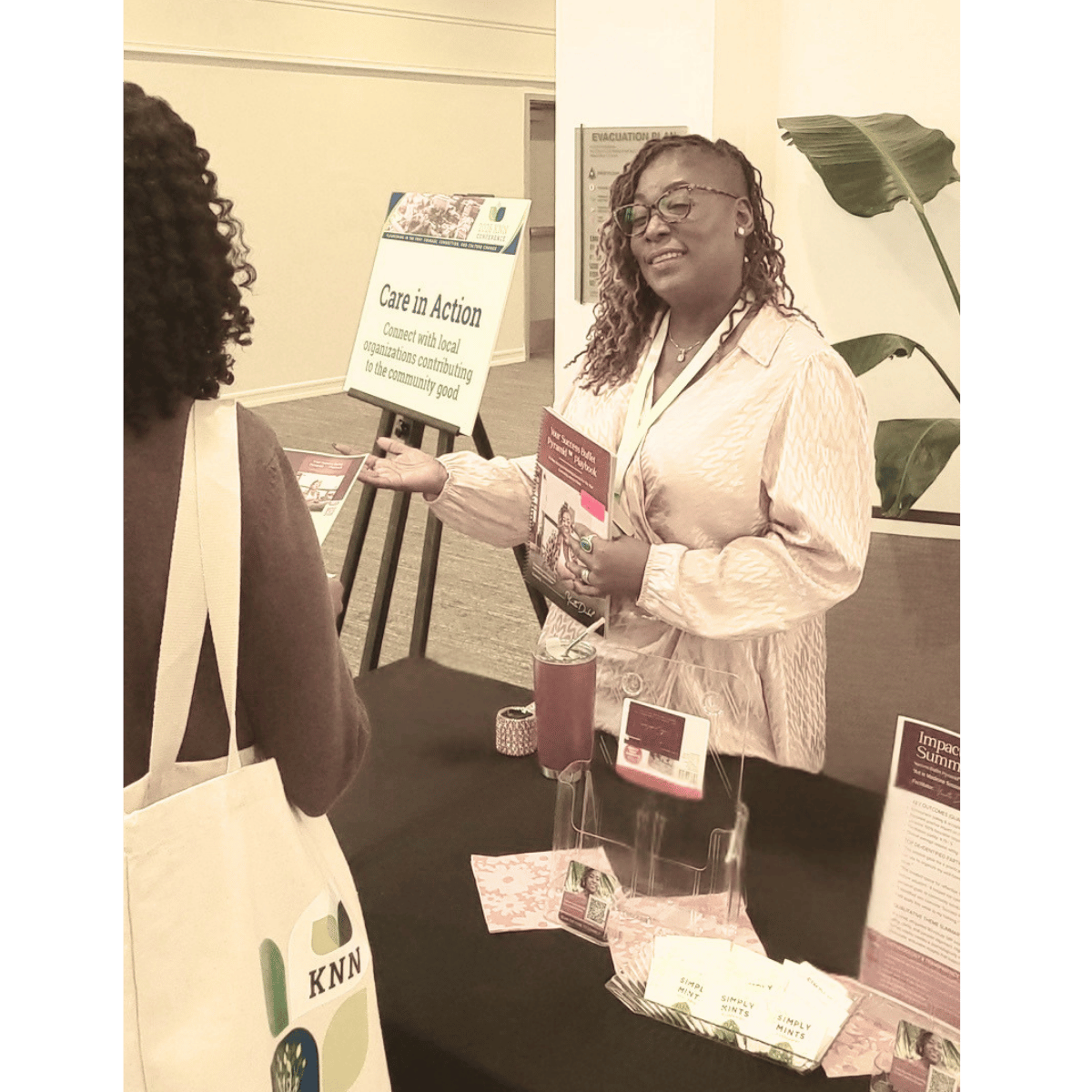 Community practice
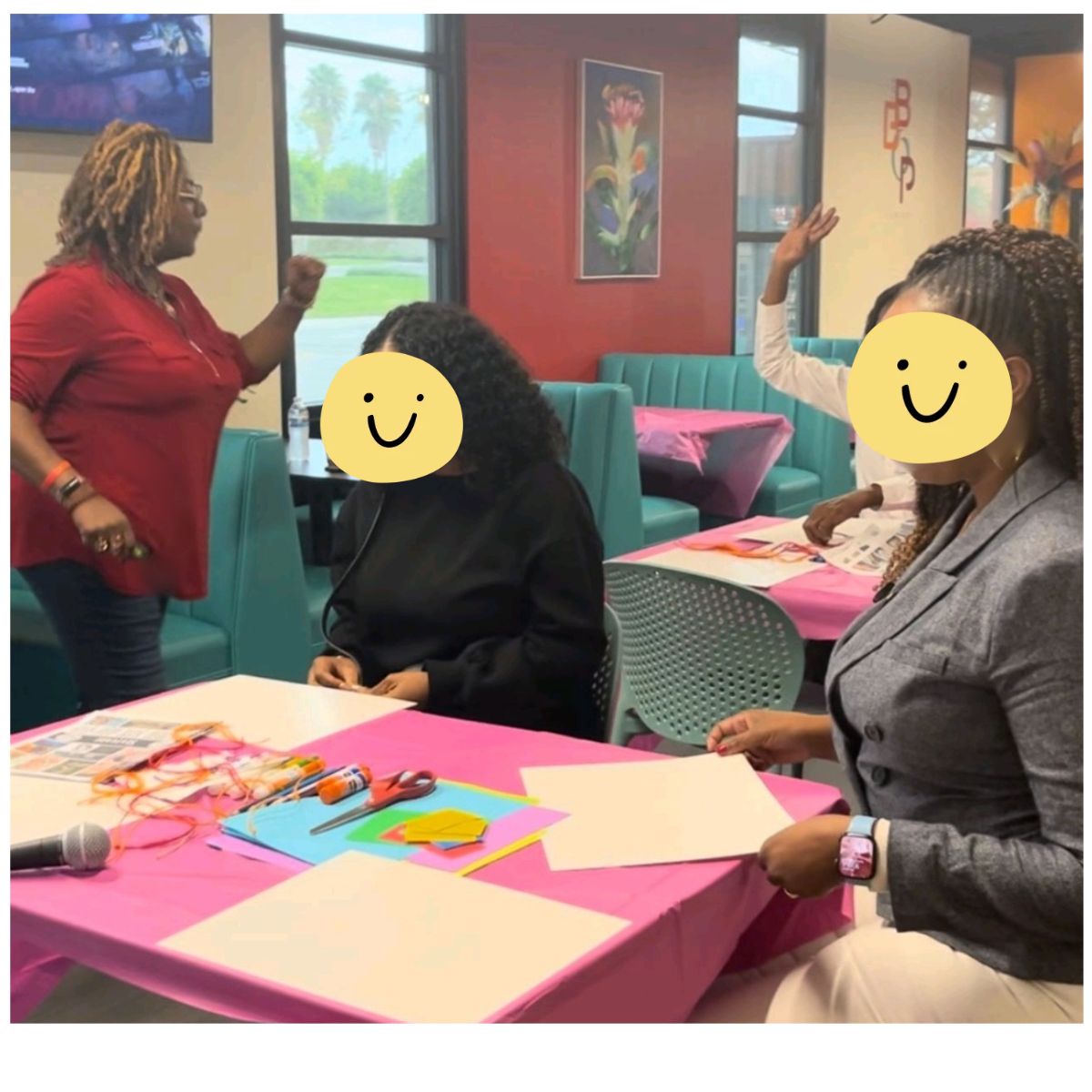 Facilitated session
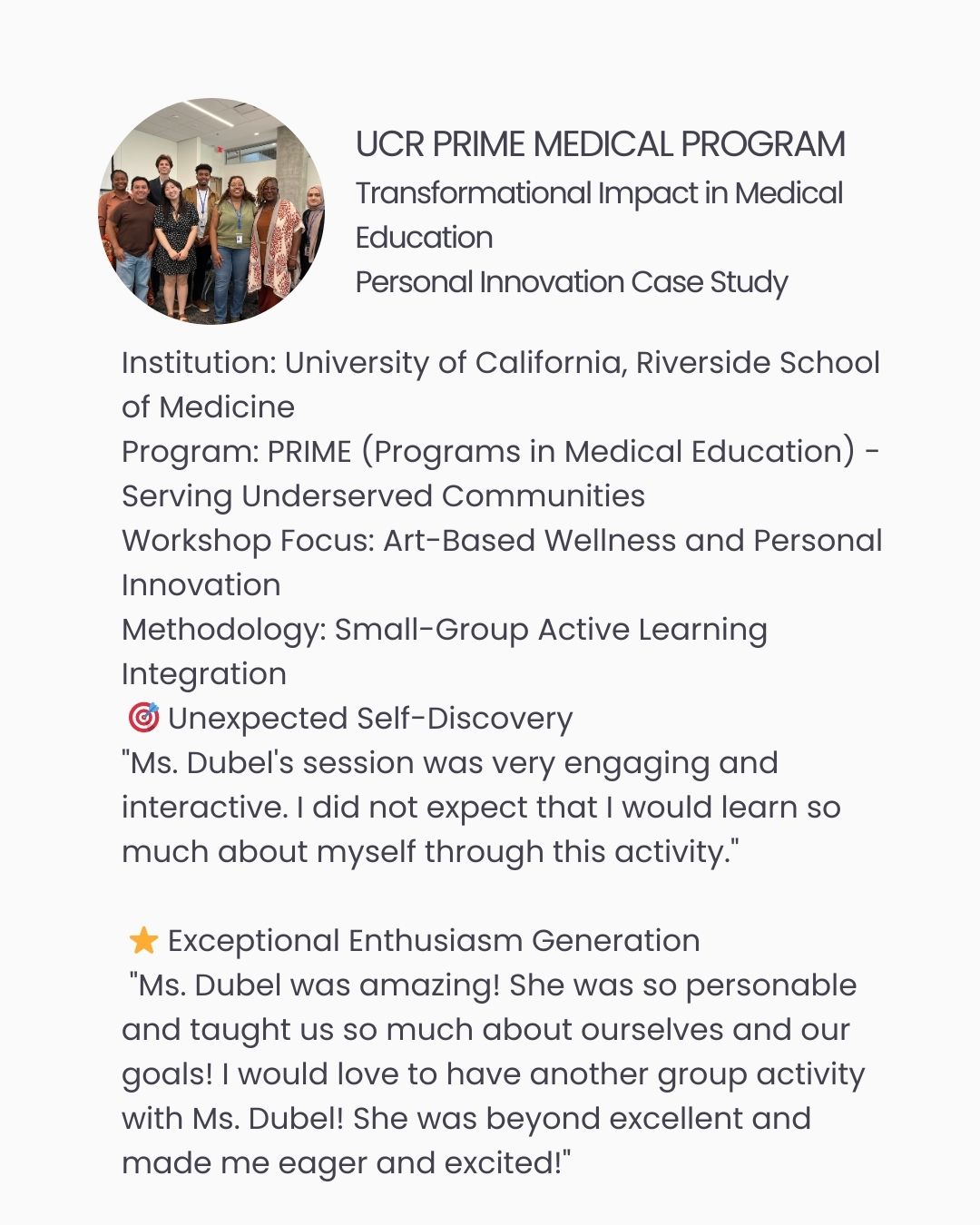 UCR · PRIME medical scholars
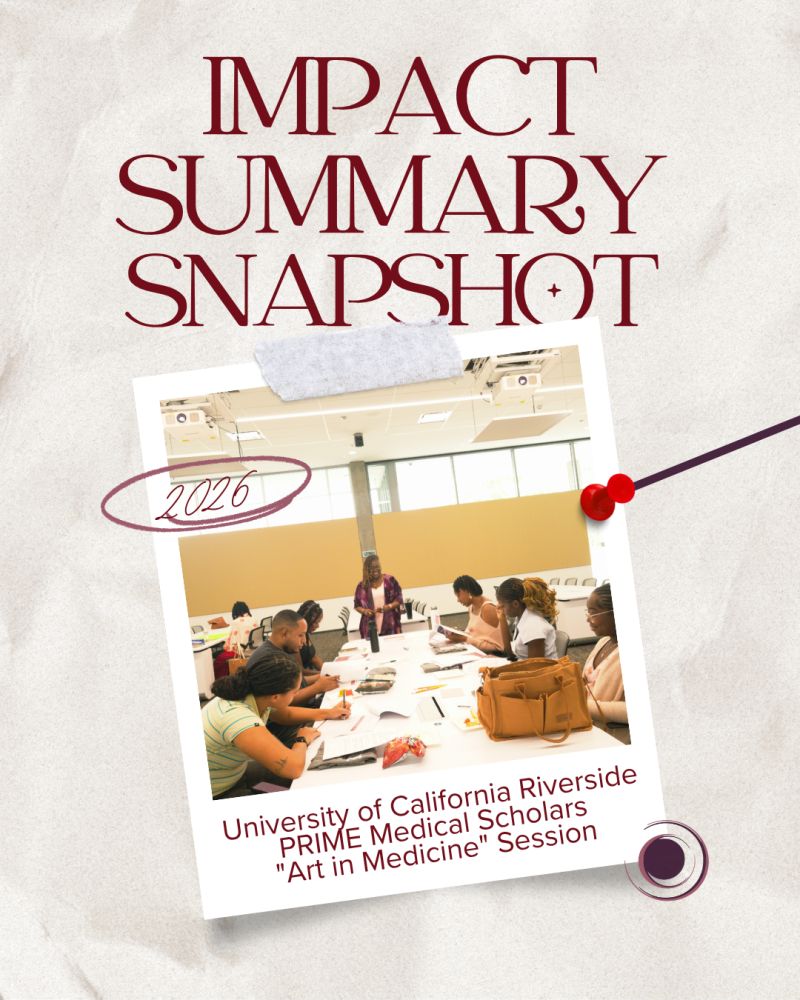 Impact summary · 2026
 Personal Innovation
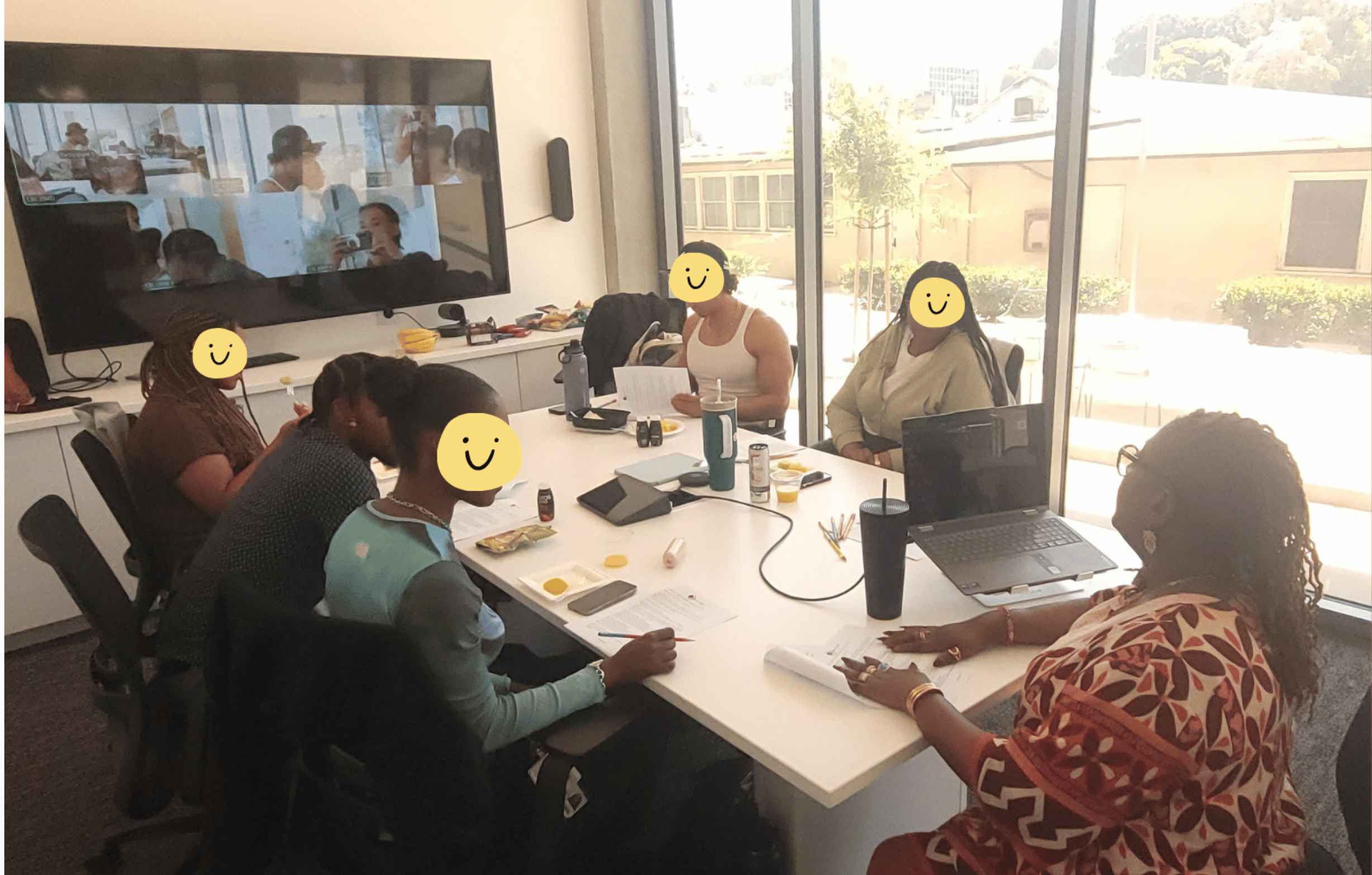 Working session
“One thing that stands out about Yvette is her ability to listen and understand my unique situation, and then provide tailored advice that is practical and actionable.”— Ramiz Nisar
Recommendation
about working with Yvette.
This recommendation reflects Ramiz’s experience working with Yvette. It is not presented as a review of the EI Continuum Reflection Review, and it is not a product evaluation.
These figures describe feedback from a July 2026 UC Riverside Art in Medicine session with six participants. They describe the facilitation experience in that setting and are not presented as outcomes from the EI Continuum Reflection Review or a MicroIntervention.
05 / Next Step Begin with the EI Continuum Reflection Review
Choose the starting point that fits where you actually are
Book a review.
Choose an available date and pay the $500 deposit. Your appointment is confirmed once the deposit is paid and the date is on the calendar.
Complete the Reflection Worksheet.
You receive the EI Continuum Reflection Worksheet after booking. It is the preparation tool for the review — a separate resource from the free public Assessment Guide. Return it at least two business days before your session — the $1,000 balance is due on return.
Meet for the review.
Once the balance is paid, we meet to discuss what your reflections show, the friction patterns behind the stall, and a practical starting point.
Receive a written summary.
The summary records the review’s findings and a suggested next step. It is yours to keep.
Decide whether to continue.
A focused MicroIntervention or broader collaboration can be considered if it fits the situation — with no obligation to proceed.
+ Compare the review options
| EI Continuum Reflection Review | Team Review | Leadership Interviews | |
|---|---|---|---|
| Scope | A starting point for one leader’s organizational situation | Up to 4 team members, each completing their own worksheet | Up to 3 leaders, interviewed individually alongside worksheet patterns |
| Included | Worksheet, facilitated review, written summary | Individual worksheets, comparative review, shared summary | Leadership interviews, comparison with worksheet patterns, review, summary |
| Investment | $1,500 | $4,000 | $9,500 |
| MI credit | $750 within 45 days | To be confirmed | One third (approx. $3,166.67) within 15 days |
| Lead time | Review at least 5 business days after booking | Schedule confirmed on booking | At least 15 business days |
Ask about the Team Review → · Ask about Leadership Interviews →
The Clarity Promise
My commitment is to provide a thoughtful review of what you share, a facilitated conversation about the patterns it reveals, and a written summary identifying one practical direction to consider. What is clear is that the cost of leaving organizational friction unexamined is far beyond any dollar amount — because friction is rarely the problem itself. It is a symptom, and often the first visible sign that whoever was absorbing it has left, shifted roles, or quietly stopped carrying it. One facilitated conversation is not a cure, but it is the fastest way to learn what the symptom is pointing at.
The review is a starting point, not a guarantee of organizational transformation. What happens afterward depends on the organization’s willingness and capacity to engage with what emerges, to make decisions, and to follow through. Understanding where you are is key to your next step.
If the written summary does not clearly reflect what we discussed, contact me within 10 business days of receiving it and I’ll offer one follow-up conversation to clarify the summary and next step.
? How do we know whether the problem is organizational friction rather than individual performance?
A stalled project is too often read as a motivation or communication problem. This review looks one level down at the conditions around the work: how decisions get made, what people feel safe saying, and whose knowledge counts. It is not a performance assessment, and no individual is evaluated.
? What does innovation fatigue, or change fatigue, look like from inside a leadership team?
It often shows up as repeated restarts of the same priority, leaders carrying the work personally, adaptation that never lands, and a quiet assumption that somebody else will fix it. Innovation fatigue is rarely answered by another initiative. The Continuum places that pattern on a seven-stage map so the organization can name where it actually is instead of arguing about labels.
? What is team facilitation, and how is it different from running a workshop?
Team facilitation is a conversation held by someone outside the work who is responsible for the quality of it, not for delivering content. A workshop hands people new material; a facilitated session gives them the safety to say what is actually true about the conditions they are working inside. Here that means one structured session with me, built around your own reflections, ending in a written summary you keep.
? Is this therapy, coaching, or consulting?
It is a structured organizational review facilitated by an Artist-Researcher and Cultural Systems Advisor, closer to a diagnostic conversation than to therapy or coaching, and not a substitute for clinical care or crisis support. If what is needed is individual wellness support, that will be said plainly.
? How is what we share handled with regard to confidentiality?
Participant reflections are treated as confidential material. In any small-group setting or leadership interview, I explain before you take part who can access individual responses and what will be shared with leadership. Shared summaries focus on themes and patterns, and individual comments are not attributed by name without the participant’s permission. Because people can be recognizable from their role or the details they provide, confidentiality has limits, especially in small groups, and those limits are set out in the engagement agreement before any work begins.
? What happens after the review if we decide to continue, and what if the review is not the right fit?
Nothing is booked automatically. If the review points to something specific and a focused MicroIntervention makes sense, the scope, format, and cost are discussed before anything is scheduled, and a broader project may follow where the situation calls for it. If the review makes clear that you do not need more work, that is a legitimate outcome and part of what the written summary captures. The review fee is not contingent on further engagement.
? What does the EI Continuum Reflection Review cost, and what are the deposit terms?
$1,500, with a $500 nonrefundable deposit to secure the date and the remaining $1,000 due when your completed Reflection Worksheet is returned. I read and analyze what you return only once that balance is paid, so no review work begins before payment is received. A missed appointment may be rescheduled once within 30 days; after that the original booking and deposit are forfeited and a new appointment requires a new booking and deposit. Reviews are scheduled at least five business days after booking, and a $750 credit applies if a MicroIntervention is booked within 45 days after the review.